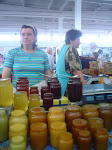
Saturday, 21 March 2009

Time of Reflections and Turn-overs....


We all don't know what's the end of the flowing river or under the calm water..


I was just reflecting on my years and time here in Ukraine and the thought of leaving (that is, not using Ukraine as my base) makes me sad. Ukraine (Donetsk) is been my home and base for seven (7) years now. Got use to live here, love the family and friends that God has given me during the seven (7) years of working with the locals here.

The change of plans and everything that I will do here in Ukraine will take place this year, due to the new phase of my life, that, I believe part of God’s will in my life. I recently got engaged and that will change a lot in terms of my work, my base and life in general.

After telling the core leaders of the big news, I’ve been spending more of my time in doing visitations with the church people. Part of it, is because I was gone for awhile (5 mos) attending a Community Development training in the US (SIFAT) with a couple of Ukrainians with me. I am trying to get connected again with the people after being away.

The thought of me leaving Ukraine makes me sad. Sad that I will not get to see and talk with them everyday and not to do more than I wanted to, if I am in another country. There are still lots of things that I wanted to do here in Ukraine, but I know and I believe that there’s time for everything, as what the book of Ecclesiastes says in in the Bible.

This time maybe the time to change my role here in Ukraine (in regards to ministry/work). And I know God has other plans for me that needed me to be with a partner to accomplish whatever that is. I trust God completely with my life and whatever it is that He has for me, I will obey and trust Him that, it is the best for me.

Turn-over of works/ministries was done three years ago. I’ve been doing it slowly, as I believe and think that my part is to train leaders and established ministries and then let the trained leaders take over the works after. When I arrived here in Ukraine, I know for the fact that, I don’t know how long I will be here in Ukraine. My goal is to assist the pastor and leaders by training and helping establishing ministries. And for the last three years, the locals are the ones that’s been doing the works and I know and believe that they are capable of continuing what we started together.

Of course, there’s a mix emotion right now as I prepare myself and prepare to leave, but I also know that my involvement with the Ukraine ministry will not end here. It might not be like it was before but, I will still be involve by helping them in Summer Kids Camp by bringing a group of young people to help them in the camp and to organise people, churches that wants to get involve in this work or to help the church in general by doing leadership/discipleship trainings/seminars whenever in Ukraine.

I always believe that; healthy things grow, growing things change, change brings pain, and pain brings gain. Progress always brings change, and to gain something, it will cost something. I also read somewhere that "Change is the only things that doesn't change"...:)

Will keep you updated in the coming days of what’s happening and will definitely share with you the new adventures that I will have with God in the coming days.


Blessings!

Thursday, 12 March 2009

Ukraine's Drug Pushers...

Drug Pushers
Yesterday, 20:19 | Yuliya Popova, Kyiv Post Staff Writer


Experts say that consumers end up paying more for medicines they do not need because pharmaceutical companies pay doctors to promote their brands. - Oleksiy Boiko


Some doctors act in the interest of pharmaceutical companies, not patients.

If your Ukrainian doctor prescribes medication for an ailment, at least two questions are in order: “How will this help my health?” And, sadly, the other all-too-logical question for patients is: “How much are pharmaceutical companies paying you doctors to prescribe this pill?”

Ukraine is proving to be a wonderland for the aggressive pill-peddling common around the world, a compromised circumstance in which doctors prescribe certain medications in return for financial favors from drug firms.

Ukraine’s health-care industry is considered to be a mess wherever one looks. The fast-growing pharmaceutical trade, until recently one of the healthiest sectors in the sick industry, has lately been under stress as well.

Importers were shaken up after the government last year restricted mark-ups to no more than 20 percent. Meanwhile, a declining domestic currency has nearly doubled the cost for imports. The result may mean lower profits.

Stepping into the void to rescue profits, health-care watchdogs say, are increasingly aggressive and desperate pharmaceutical sales representatives racing after doctors. “They are like locusts in hospitals,” said Victor Yatsyk, deputy head of the Romodanov Institute of Neurosurgery in Kyiv.

“They arrange personal meetings with medical staff and shove them their products one-on-one instead of a civilized promotion like a conference.”

The consequence is that patients often walk out of the doctor’s office with more pills than are clinically warranted.

“In the West, doctors don’t prescribe two or three antibiotics like they do here,” Yatsyk said. “[In Ukraine,] they recommend a few [extra] drugs just in case, and no one cares that it’s like using a sledgehammer to crack nuts.”

Ukraine’s pharmaceutical market was worth $2.6 billion in 2008. Domestically made drugs took up only a quarter of these sales. A non-governmental professional union, the Association of Pharmaceutical and Microbiological Industry’s Employers, estimates that 95 percent of foreign drugs have Ukrainian clones. Valery Pechayev, head of the association, thinks that Ukrainians overpay Hr 9 billion – more than $1 billion – to buy more expensive foreign medication.

In Yatsyk’s workplace, the Romodanov Institute of Neurosurgery, it is easy to see why doctors and the hospitals where they work need money.

Nurses draped in not-so-white robes over woolen sweaters rushed through chapped and cold corridors. Some medical equipment looked fit for museums. Yatsyk’s office resembled a set from a post-war Soviet film, with a single chair and desk, against toxic blue walls.

“Some companies buy furniture for the clinics in exchange for promotion. Others help with equipment,” Yatsyuk said. Some doctors, however, take payments and gifts which grow proportionally to the amount of medicine they sell. “They don’t approach me personally as I showed them the door from the start,” he added.

But if wolves are fed, the sheep don’t come out as well. “In best case scenarios, people lose financially,” Yatsyk said, referring to the alarming trend.

But financial consequences are not always the most troubling ones.

Pensioner Lidia Bilyk from Kryvy Rih lost her husband in January after a doctor’s alleged malpractice. “He had a knee injury. They injected him the type of medication which was forbidden and taken out of production,” Bilyk said angrily. “There was a strong side effect. They killed his bone marrow with an overdose of these shots.”

It all happened within six months after a workplace accident. Before that, the late Petro Bilyk turned 70 last summer in great health, his widow said. But she contends that after being prescribed with the wrong medication, Bilyk – struggling to draw breathe – fatally shot himself in January with his hunting rifle.

“I am afraid to take it to court,” Bilyk said. “My husband was a stubborn man. He wrote to health authorities seeking justice. But they replied saying that he could have [prescribed] this medicine himself. I don’t want to pursue it. What if anything happens to my son?”

Before taking his own life, Bilyk approached the All-Ukrainian Council for Patients’ Security and Rights, a non-governmental organization in Kyiv. It has no resources to work outside the capital.

But Victor Serduk, the lawyer and doctor who heads the NGO, said of the abuses going on with prescribed medicine and conflicts of interest with health-care personnel: “It’s genocide against the nation and a medical experiment.”

In Ukraine, a person's ethical code is often the only check on unethical behavior. “Personal greed makes doctors get royalties from pharmacies,” Serduk said. “In Ukraine, we are governed by situational ethics. If no one is watching over your shoulder, do whatever you want.”

Timur Bondaryev, a senior partner from Arzinger law firm, said that there is little chance of winning cases on patients’ right in Ukraine.

“To prove doctors’ lack of professionalism, there is a need for an expert assessment which is also carried out by their colleagues in white robes,” Bondaryev said. “Because of solidarity and the so-called ‘union’ factor of their profession, these experts refuse to testify against their co-workers and soften their conclusions considerably, which makes it impossible to hold a quack responsible.”

The Association of Ukraine's Pharmaceutical Manufacturers, which represents 80 percent of domestic producers, admits the industry lacks regulation. Such lax oversight opens the way for unfair methods of competition, said association president Petro Bagriy.

One psychiatrist quit the profession mainly because of the intrusive pill marketing. But she didn’t want to be identified because she was thinking of returning to the fold and didn’t want to face the wrath of colleagues. Of the seamy prescription practice, she said: “Doctors in charge of the asylum would advise persistently what brand of medicine to prescribe. I felt restricted in treating my patients and it was repulsive.”

She said that pharmaceutical representatives were frequent guests in the clinic and even had keys to the asylum, which is off-limits to the public.

A Kyiv representative of a leading multinational pharmaceutical company also refused to be quoted by name. But the representative refuted accusations of unfair dealings.

With more than 500 pharmaceutical firms working in Ukraine, each follows its own rules. “I don’t give bribes to my doctors,” this representative said. “I convince them with my knowledge." The sales representative said pharmacies and sales representatives print their own prescription forms to track doctors’ performances.

In America, two members of the U.S. Senate have been pushing a bill requiring drug manufacturers to disclose all payments and gifts made since 2007.

In Ukraine, however, the only policing of “the medics on the pill” appears to come from private insurance companies, not government.

“Practically every day we have to restrain doctors in their prescriptions,” said Oksana Artamonova, deputy head of the medical services department of the European Insurance Alliance. “Very often, either because of lack of knowledge, little experience or some other reasons, some doctors advise medication of the same type to strengthen the effect. That’s when we step in and argue.”

Once again, business trumps ethics, Yatsyk said, and may continue to do so until physicians start earning decent salaries and working in adequately equipped hospitals.

Facts about Vodka

Vodka facts: All you wanted to know and never bothered to ask
Yesterday, 19:26 | Alexandra Matoshko, Kyiv Post Guide Editor

Vodka facts: All you wanted to know and never bothered to ask Konstantin Klimenko
Drink up: Such an incredible variety of vodka brands can be encountered in Kyiv's supermarkets, making the choice of brands tricky.

Vodka (“horilka” in Ukrainian) stands high among the top stereotypes used to describe Ukrainians. What do Ukrainians like above all? Vodka and salo, of course. We have already done an article about the lard. However vodka proved to be a much more extensive topic.

Anyone new in the country can tell that vodka is indeed a highly popular national drink, simply by viewing the vodka section at any supermarket – it runs several meters, showcasing an amazing variety of vodka brands. There are no less than 40 of them produced in Ukraine, while an average supermarket holds as much as 20. Besides, most brands offer a number of different kinds each. Naturally, Ukrainian vodka is one of the common souvenirs any tourist tries to take home. And that’s where he faces the difficulty of choice. Unless there is a vodka connoisseur around to give coherent advice, inscriptions like: “honey with pepper,” “on milk,” “rye” and “on birchtree buds” on the labels can easily confuse not only a foreigner, but even a Ukrainian, who is not an experienced vodka drinker.

A classical definition of vodka is “a drink of water and ethanol, containing a small amount of impurities, sometimes with berry or fruit flavorings as well as spices.” The alcohol content may range from 40 to 56 percent. But there is much more to know about the beloved drink of the Slavs.


History


One of the widespread myths is that of vodka as an original Russian/Ukrainian drink. In truth, the first to obtain liquid similar to vodka was Persian Doctor Al-Razi – in the XI century he managed to extract ethanol by distillation. But of course with Persia being a Muslim country which prohibits alcohol entirely, the new liquid was used only for medical purposes. The first to distill alcohol in Europe was an Italian monk-alchemic, Valentius.

Using Arab methods to distill grape must and turn it into ethanol, Italians obtained “aqua vitae,” which later gave birth to all modern spirits – brandy, cognac, whiskey, schnapps and of course, vodka.

The history of vodka in Russia began in 1386 when Genoese merchants first brought “aqua vitae” to Moscow. Instead of grapes, Russians used rye to extract ethanol, thus the Russian called vodka “bread wine” at first.

Back then vodka was frequently flavored with herbs, berries or spices, and in 16th-17th centuries anise vodka was very common. It lost its popularity long since, but anise is still used in many world-famous spirits: Turksih raki, Greek ouzo, Italian sambuca, and French pastis.

Vodka production was one of the first businesses to be controlled by the government in Russia. It started with tsar monopoly on vodka production in 15th century, which allowed only tsar-owned factories to produce it and sell it exquisitely in Tsar kabaks (taverns). As a result, vodka lost in quality. And corrupt buisness of greedy kabak heads led to more crime. Because a lot of vodka was sold on credit, it led to “kabak debts” and consequently to the enslavement of those who couldn’t pay up. In 1765 Catherine the Great granted the privilege of making vodka exclusively to noblemen – the richer they were, the more they were allowed to produce. Because of serfdom, the landlords had plenty of free workforce and concentrated on improving the quality of vodka regardless of the cost and lengthy production time. In 1863, the government monopoly on vodka was abolished, which caused the prices fall dramatically. The drink became much more popular with the population.

In 1894, Tsar Alexander the Third introduced the first vodka quality standard that is used until now. The first patented vodka “Moskovksaya Osobennaya” (“Moscow Special”) contained 40 percent alcohol, which was said to be an ideal alcohol content by the great Russian chemist Dmitriy Mendeleyev.

Ever since its first appearance vodka was widely promoted, and it was only in 20th century that its dangerous qualities were recognized and the attempts were made to prohibit drinking. In 1914 Tsar Nikolay the Second announced prohibition for the time of war. The prohibition was “inherited” by the Soviets and abolished only in 1924.

In Soviet Union, attempts to limit vodka consumption were taken several times. The last one was 1985’s prohibition announced by Gorbachev. However, such measures lead to peculiar results. Plenty of individuals used self made devices for making samogon (self-made vodka), a lot of which was sold illegally. Also, at the time of the most serious restrictions when you could only buy a bottle or two a month by producing a special coupon, aclohol addicts would succumb to drinking cologne and other chemical liquids with high concentration of ethanol. Needless to say, this frequently led to fatal consequences.


The world of gorilka

Overall, Ukrainian vodka is considered high quality and many of its brands are exported worldwide. Also, counterfeit is quite rare nowadays, though it’s still best to buy alcohol in licensed shops and kiosks.

When it comes to choosing the right Ukrainian vodka, it depends a lot on an individual taste, and it’s hard to say which brand is the best. Hortytsya, Nemirroff, Stolichniy Standart, Soyuz-Viktan TM SV, Prime, Tselsiy, Klibniy Dar and Medoff are considered to be among the top brands. Boasting different awards, they are often included in international vodka ratings. It certainly doesn’t mean that all other vodka brands aren’t worth your attention. However if you’re seeking high quality classical vodka (with no flavors), those brands are a sure bet.

In general mid-range vodka costs around Hr 15 per half a liter, while fancier kinds can run up to Hr 20 and more. The price largely depends on the quality of ethanol or “spirt” as it’s called here – “spirt extra” is used for cheaper vodka and “luxe” is for pricier types. Other important elements include quality of the water and purification methods, as well as exclusive recipes.

One thing important to know when choosing a vodka is what those various signs on vodka labels mean. “Klassychna” (Classical) on a vodka label indicates a common type and “Osoblyva” (Special) may be slightly softened or spiced up but without any special flavor. There is also “Light” vodka with 35 percent alcohol.

While the majority of vodka is distilled from grain, some producers make bread the main ingredient. The main bread vodka brand is “Khlibniy Dar,” others offer bread vodkas in their lines – “Zlatogor,” “Bilenka,” “Vdala,” Olymp,” and “Holodniy Yar” among others. They also indicate the type of grain used: wheat ("Karat," "Bilenka") or winter wheat ("Bayadera Klibniy Dar"), rye (Gorilochka) or barley (“Khlibniy Dar”).

Some labels also specifiy that vodka is made of spring water; the other labels say: “Na Moloke” (on milk) – “Mernaya,” “Bilenka” – which means that this particular vodka is purified by dry milk – a technology known since 19th century but unused for a long time. “Na Berezovykh Brunkah” (on birch tree buds) is another widespread type of vodka, which means that vodka contains aromatic spirit infused on birchtree buds which softens the taste. There is also vodka with special healthy flavorings such as ginseng extract (Kozatska Rada) and acacia blossoms (Zlatogor). Blagoff’s green apple, pear and mandarin vodka – sweet with strong flavor – will be mostly enjoyed by women.

Historically, honey and pepper are the top popular ingredients for Ukrainian gorilka. There are even specific brands specializing in honey-smoothed vodka. “Medoff” offers several kinds, including the one with cayenne pepper and “Medoff Gold,” combining aroma of slovenwood and basil. “Medovukha” brand is called after an ancient strong Slavic drink and offers six kinds according to different types of honey used – Carpathian or Poltava blossoms honey, May honey, wild honey and buckwheat honey. A highly popular honey-and-pepper combination “Medova z Pertsem” is offered by Nemiroff.

For special occasions you can choose between luxury brands like Tselsiy for Hr 40 per half a liter, “SV Luxe Premium Vodka,” Karat Khlebnaya Sleza (Bread Tear) in handmade bottles (Hr 100 per liter), LEX vodka and Nemiroff Premium, among others. For gifts, you can get vodka in special fancy bottles and sets with shot glasses, as well as custom-made vodka vessels in a shape of a sword, a Cossack, or a girl in a traditional outfit. Chernihiv factory produces vodka in phallic-shape bottles, calling it “Harmata” (Cannon). However the quality of vodka in original bottles, especially the ones that are made of not transparent materials, may be a miss, so it may be best to keep it as a souvenir, rather than drink it.


Drinking tips


Ukrainians mostly drink vodka cold (but not frozen) at one draught in 0.50 ml shot glasses. Therefore, if you’re ordering a vodka at the bar, don’t expect it to arrive with lemon on the rocks in big glass – you would have to ask for it specifically. Many pro vodka drinkers consider sipping on vodka quite nonsensical, unless it has any peculiar flavor. Washing vodka down with water or juice is also considered bad taste, though there is an old Moscow tradition of following vodka shots with sweet tea. On the other hand, drinking vodka at one draught has its side affects – that way it’s easier to overdose. Quickly consuming a liter of vodka is potentially lethal, so it’s good to make pauses between shots, chat and help yourself to appetizers.

In classical fashion vodka is drunk with appetizers and in general it’s good to drink with a full-scale dinner, as it washes off the taste of a previous dish and makes your palate senses more acute.

In Ukraine vodka is still often drunk at lunch – a shot of this appetitif followed by a spoonful of hot red borscht is quite usual.


Products that best combine with vodka are salo, veal and ham, herring and salmon, pickles, boiled potatoes etc. Red and black caviar are widely known as the deluxe vodka appetizers and they indeed go really well with it. On the other hand, watery products (such as caviar and pickles) dilute ethanol essence, increasing the “high” effect from vodka. Therefore, some like Professor Preobrazhenkiy from Mikhail Bulgakov’s famous novel “Dog's Heart,” claim that hot appetizers are the best – the make you feel euphoric but don’t affect your ability to walk.

Thursday, 5 March 2009

SIFAT Alumni 2008 - Wonderful and Unforgetable


SIFAT (Servant in Faith and Technology) is one great opportunity and experience that I had had in the US.

God gave me an opportunity to live among His children from five different continents! It was amazing to realize how we SIFAT participants come from different cultures and backgrounds, yet we share the common love and passion for Christ.

All of us got to taste a 'bit of heaven' while we lived in the campus and attended our classes everyday, from 7 a.m. to 6 p.m.

Living and teaming up with other believers from other countries is amazingly exciting and humbling. We all learned from each other and accepted our differences, letting the love of Jesus be manifested in our lives everyday.

One of the things that I will never forget and will always remind me of this 'taste of heaven' is when we, as a class, sang "God is So Good" in 13 languages. It was awesome! It was like God was allowing us to experience heaven on earth. That wonderful worship experience made me realize anew that no matter what language we speak, we sing praises to one God!

I will always remember my class in SIFAT. My classmates became my instant family during the practicum and training. God just binded us together with His amazing love.

On this note, I would like to thank you all for partnering and supporting to have this SIFAT training/practicum. Your prayers and financial help allowed me to experience unique Christian moments while on training in the US, and yes, equipped me to do more as I continue to reach out and minister to others by sharing the love of Christ in practical ways.

Indeed, there are so many needs everywhere. Having said this, I know that we cannot do everything. We can only do as much, and let God multiply it and do it effectively. I believe that even the smallest things that we do for God will impact the lives of people around us -- just like the ripple effect.

There is an interesting meaning or explanation for the word "ripple" (capillary wave) from Wikipedia. As I was thinking about this word and how significant it can be, I made some research and found this out:

A capillary wave is a wave travelling along the interface between two fluids, whose dynamics are dominated by the effects of surface tension. Capillary waves are common in nature and home, and are often referred to as ripple. The wavelength of capillary waves is typically less than a few centimeters.

A gravity–capillary wave on a fluid interface is influenced by both the effects of surface tension and gravity, as well as by the fluid inertia.

The Sacredness of a Broken Heart

The Sacredness of a Broken Heart
by Stephanie Voiland
January 7, 2009


We all know it hurts to have your heart broken. And now they finally have the scientific data to back it up. Recent research from the University of California, Los Angeles, indicates that emotional pain may be more closely linked to physical pain than scientists previously realized. According to Naomi Eisenberger, lead author of the study, the distress from rejection registers in the same part of the brain that responds to physical pain, triggering similar sensations to, say, a broken arm. Which is just affirmation of what we've known all along: heartbreak hurts.

If you've had any prolonged exposure to other human beings, chances are pretty good that somewhere along the way you've had your heart broken. If not, hang on—you will soon enough. Maybe someone who promised to stick with you left with little warning. Maybe a close friend betrayed your trust or let you down when you needed her most. Or maybe you have that awful feeling in your gut that the person you love just doesn't love you back. When our hearts are broken, we limp along, wondering how we ended up here and if we'll ever make it to the other side of the pain. And perhaps worst of all, we feel utterly and helplessly alone.

But what I've been noticing lately in Scripture is that we aren't alone in this. God himself—powerful and holy as he is—knows what it is to have his heart broken. He isn't sitting up in the clouds somewhere, watching with detached interest as if we're some daytime TV show. He's fully engaged with us, pouring out his love on us and longing for us to love him back. When he made us, he could have created beings who were automatically loyal to him, who robotically returned his affection. But instead, he designed us with the will to decide how we'd respond to him, and in doing so, he opened his heart to profound love—and profound heartache.

So when we endure these heartbreaks ourselves—rejection, betrayal, abandonment—we don't walk through them alone. God has walked that road himself. And in some mysterious way, when our hearts are broken, we're given new insight into the very character of God.

The Sacredness of Being Rejected
The Old Testament is more than merely a historical narrative or a set of rules. Woven into the lining of each book, each story, is a common thread that reads more like a romance novel: God pursues his chosen people; they reject him and turn to less worthy loves; he keeps loving them anyway. Time after time, he does whatever it takes to win his loved ones back.

Ever since the beginning, we humans have been breaking God's heart. Adam and Eve had the unparalleled opportunity to walk in unbroken closeness with God, yet they rejected the relationship he offered in exchange for a hollow promise (Genesis 3). Since then, people have continued to turn our backs on God's love and faithfulness. Jeremiah recounts the way God aches over our rejection of his love: "They broke that covenant, though I loved them as a husband loves his wife" (Jeremiah 31:32). If anyone has felt the sting of rejection, it's God.

The Sacredness of Being Betrayed
Our God is not a stranger to the pain of betrayal, either. In one of the most heartbreaking illustrations recorded in the Bible, the prophet Hosea lived out a devastating parallel to God's relationship with his people. God instructed Hosea to marry Gomer, a woman who was compulsively unfaithful to him. Time after time she betrayed him, yet he consistently took her back, loving her against all logic, and, no doubt, the advice of his friends. God's message to his people was clear: By giving their affection to false gods, they were breaking his heart. Their betrayal was a slap in the face of his unconditional love and forgiveness. And perhaps we aren't so different today. We flirt with less worthy loves and continually break God's heart with our betrayal. And still he takes us back, his love as fierce as ever.

The Sacredness of Being Abandoned
When we find ourselves left alone by someone we love, there's comfort in knowing that God has endured that kind of abandonment too. At the end of Jesus' time on earth—arguably the darkest hour of his life—he was abandoned by his closest friends, the men he'd spent the bulk of the last three years with. As he was pouring out his grief to God, they were off napping. When he was being arrested, they were high-tailing it elsewhere to save their own skin. And when Jesus was on the cross, even God himself turned his face away, prompting Jesus to cry out, "My God, my God, why have you abandoned me?" (Matthew 27:46). Yes, he knows the agony of abandonment.

A Glimpse into His Heart
The past few months have been marked by some unprecedented heartbreaks for me, as I said good-bye to a particular person and a particular version of a dream. I don't know what your heartbreak looks like—if you're barely holding the fragile pieces together or if everything has shattered in so many places you don't even know where to begin. Needless to say, this isn't a road we would have chosen. But along the way, we cling to the hope that God just may redeem this heartbreak and, in the process, give us glimpses into who he is.

When you feel like your heart is broken beyond repair, remember that nothing about this place is ordinary. You are uniquely poised, at this very moment, to share an intimate part of God's character. It's the place of the broken heart, and it's sacred ground.

We welcome your feedback and brainstorms at: SinglesNewsletter@ChristianityToday.com

Sign up for the weeklySingles Newsletter!

Copyright © 2009 ChristianityToday.com

Thursday, 14 August 2008

Don't stop doing good...


2 Thessalonians 3:13

"And I say to the rest of you, dear brothers and sisters, never get tired of doing good."


I was reading this morning the book of 2 Thessalonians 3 and this verse spoke into my heart and reminded me about doing good.

We just had another successful Kids Camp. And once again, the children enjoyed it and was happy. And even before the last day of the camp, the children were already asking about the next year Kids Camp!:) The children were actually asking why the Kids Camp is only one week and not longer!:) I have to tell them that the workers/volunteers can't get longer off from their work, as all them are working, except the youth that are having their summer break from school/university. But one of the other reasons, is that we don't have enough funds for longer camp, even if we want to, unless God wants us to do it longer then I/we know that He will provide for it!:)

Which brings me to another amazing things that God did for this camp. He not only provided additional volunteers/workers but He also provided additional finances for the Kids Camp. We (the team) as we met every week before the camp, talked about how many people (the ones that used to volunteer) can't help during the camp as their summer holidays from work was either before or after the camp. Sergei (the pastor) was concerned about how we (15 volunteers) will handle 100 children during the camp!

First day of the Kids camp, there were more than 20 volunteers that showed up!:) And as the Kids camp progress there were 4 more people that showed up and helped in the camp, there were more than enough kids camp workers that helped during the kids camp. God knows what we need and how He will provide for that needs!:) The team worked well and I felt that this Kids Camp was easier to run than the last time. The whole program just run smoothly. And everyone knows what to do and what to expect everyday. They were ready and prepared. It was just amazingly great team work!:)

Another blessings that God provided for the Kids Camp is the football player that I've randomly met 2 weeks before the camp. He stumbled upon my website, sent me an email to encouraged me in what I do here in Donetsk and expressed his desire to help with my work. After sending me an email, he rang me on my mobile and told me the same thing that he wrote on his email.

He (Kingsley) is a professional football player. He just came to Donetsk a month ago from Cyprus where he used to play as well. He was offered a better pay to play in Ukraine, that's why he came and joined the Mettalurg Donetsk Football Team.

After expressing his desire to help me and my work, I said that he can help me by helping the upcoming Kids Camp. He readily agreed and we decided to meet up that evening and talk about it. I asked Sergei (the pastor) to join us in the meeting that evening, since he wants to get involve its just right to meet with the pastor as well. He contributed financially and agreed to come and play with the children during the camp.

The highlight of this year's Kids Camp was the time that the footballer spent playing with the children. Football is a big thing here in Ukraine. The children were so happy and enjoyed their time with him. They enjoyed the McDonalds treat that he brought to the camp for all the children and workers. Have their photos taken with him and even asked for his autograph!:) The children asked him to come next year's Kids camp.

What amazed me with all of these is the way how God met our needs in wanting to do good for others even if we don't have enough. Even before we know that we will be needing more funds and volunteers, God already working and preparing those needs and will send it in His right time. He is never late nor advance, He is always on time. We just have to learn to wait and trust in Him!:)

I believe, what matters the most is what's our heart's desire, and God sees and knows that. And He will make the way for us to be able express that desire to do good for others. He is looking for people that is willing to be a channel of His blessings and He will take care of the provision to make it happen.

I believe that what we've doing in this community (Mine 12/18) is making a positive impact in the lives of these young children and gives them hope for a better future. We just have to continue to do good for them. We saw positive changed in the lives of these young children since we started doing kids camp in that community 5 years ago and it will surely affect their family and peers.

Tuesday, 12 August 2008

The First Real Mission....

FROM RELEVANT MAGAZINE


The First Real Mission

Beth Guckenberger
It’s almost the end of the week, and we’ve run out of projects, supplies and motivation.

For the past few years Todd and I have sponsored our church’s youth mission trips to Queretaro, Mexico. In general, we know what to expect. A little paint here, a little polish there, some late-night tacos, an evangelistic drama—all in the name of the Lord.

The truth is, no one really cares. As I unpack the paints, I think, “Haven’t we painted this wall before?” We are frustrated, the students are uninspired and, worst of all, the nationals we have come to serve are unaffected.

One of the men from our group comes up to us and says, “About two more hours, and we can clean up here and head for dinner.”

“Two hours, huh?” I sigh.

I close my eyes and try to think how to fill that time, until Todd interrupts my thoughts: “Remember the orphanage we visited in Albania?” he asks, his back to me, bent over, cleaning some paintbrushes.

“Sure. Why?”

“You think there are any in this town?”

Even before he can stand up and turn around, I’m gone. I dash over to where our teens are talking to some of their Mexican counterparts.

“Orphanage-o? Orphanatorio? Orphanagorio?” I try every combination with my best Mexican accent to get a reaction. “Aquí?” (“Here?”)

“Sí. Sí.” They look at me, laughing, either because the answer is obvious or because of my funny words. I don’t know which.

I wish I could say that Todd and I sat down right then and made a plan, but we didn’t. The truth is, within 10 minutes of his question, we leave the students with the other adult sponsors, and we’re in a taxi trying to find an orphanage.

Looking back now, it seems foolish. We didn’t speak much Spanish, didn’t have much money if we got into trouble, and were in a city where we could have easily gotten lost. An hour later, we’re standing in front of a children’s home on a dusty road, knocking at the door as we wave goodbye to our taxi driver.

We hear a series of locks, bolts and chains being unlatched, and the door swings open. Have you ever heard the expression “his face is an open book”? Well, the title of the book on the face of the man who answers the door is Who the Heck Are You? Even though he’s sitting in a wheelchair, he seems eight feet tall. Seeing him makes us wonder if all those locks are to keep people out or keep children in. While he waits for us to explain ourselves, I catch a glimpse of a child over his shoulder.

We struggle with our bad Spanish for more than an hour but don’t get far. Finally, frustrated, Todd gives up and starts playing basketball with some of the boys, leaving me to continue the conversation. For a while we watch Todd in silence, our host with a blank expression on his face and me hoping we really are on a holy errand.

The thought crosses my mind, Has this man already asked us to leave in Spanish and we just didn’t understand? Or is this something that You planned, Lord?

Finally, the man turns to me and says, “I can understand you. I’m an American.”

I can’t believe it. Why did he pretend? I know I should be mad—but my first thought is gratitude that we can now communicate.

He continues, “I’m a Vietnam War vet. I came to work with abandoned children because I know what it means to be tossed aside. Like them, I’m trying to forget the people who failed me. I don’t always trust outsiders.”

I say nothing.

Todd, who has overheard everything, walks over from the court, with the ball under his arm, and says, “We have $200, 25 eager students and a whole day left in our trip. Is there anything we can do for you if we come back tomorrow?”

The man shifts his eyes and says softly, “The children haven’t had meat in a year, and that window up there is broken.”

Sometimes just talking can cost you. His admission costs him something, and our request costs us as well. We all overcome our fears and say things that are uncomfortable. But we do it. As we sit there on that bench, sipping our lemonade, I know what’s happened: Our first real mission has begun.

The next day, with a much clearer sense of purpose, we set out for the children’s home. On the way, we stop at a market to buy food and toys. When we get to the front door, the children are waiting, laughing and asking if “Michael Jordan” has come back.

We have 200 hamburgers, a new window, and our crew of teenagers.

The orphanage is built like a bullfighting arena, with a large open area in the middle. Steep stairs go up to the dorms on the top layer, which encircle the courtyard below. We set up the grill in the courtyard and begin serving the meal.

After all 40 of the kids receive their hamburgers and second helpings, we find ourselves still flipping burgers. From behind the grill, Todd whispers, “What’s going on? These kids can’t still be hungry; go see if you can figure out where all the food’s wandering off to.”

So I mingle with the kids, who are holding napkins full of hamburgers. Some are carrying them up to their rooms; I follow one little preschool girl up the stairs to the dormitory, and with each step, it’s almost as if I can feel her leading me, wanting me to see something. When we reach the top, she hesitates only slightly as she enters and leaves me standing in the doorway.

She’s hiding the hamburger patties under her mattress.

When I walk into the room, some of the other girls are startled and one of them starts to cry. Why? Do they think I’ll be mad? Yell at them? Hit them? Take the hamburgers back? I don’t know, but none of those things even occur to me. I simply help the little girl I followed lift her heavy mattress.

After we carefully hide the girl’s hamburger, I take her hand, and we head back out the door. Then I stop and send her down to get Todd. After he bounds up the stairs, we stand together in that doorway, and something happens to us, right there, that we don’t even realize at the time. But when I chart the events of my life that followed, they trace back to that moment in the doorway.

We walk slowly down the stairs, trying to think of how we might be able to buy more hamburgers. At the bottom, the director is watching us skeptically, waiting for our reaction, and he explains that the kids often save food for later. Even though we know the hamburgers won’t keep long, none of us has the heart to stop them.

That day Todd and I had a defining moment—an experience that impacted our thinking, touched our hearts and compelled us into a new course of action. It changed our lives. I used to be afraid of that word, change, as if it implied, somehow, that I need to be corrected. But now I have a different view of change. It is a shift in perspective, and not the Extreme Home Makeover kind of change we see on television. It is a shift in what we think we are capable of. In where we want to see our life heading. In how we are willing to spend our time, talents and resources.

When people tell me about how God “moved” them, it is that kind of shift, I believe, they are talking about. It’s a step in a new direction that we couldn’t have taken on our own. Sometimes defining moments result in immediate and complete life transformations, like it did for the apostle Paul on the road to Damascus; but more often, such moments are more subtle, things we can only see in hindsight.

For me, the hamburger incident was not a defining moment that lit up in neon lights. Not at all. I flew home the next day, went back to work, headed to the grocery store, called my friends—but there was a difference. I have since described it as being like a burr under my saddle. I knew I would never feel quite comfortable again. Something inside me had shifted, and after the supernatural pleasure of that “defining moment,” like an addict, I knew I wanted another hit.

Before that trip to Mexico, I was not a bad person. I wasn’t doing anything wrong that required major discipline in my life. But that trip was more like a big wooden marker in the shape of an arrow pointing to someplace I couldn’t see—a place I was nervous about, but excited to explore. Just a week before the trip, the path I was on in my life had seemed fine, but now, in light of that experience, I didn’t want fine anymore. For a year afterward, I moved around on that saddle trying to get comfortable again, but there was that silly burr, always reminding me that I had changed that afternoon in Mexico. That is what reckless faith does—it propels me faster and harder toward God’s true plan for my life.

Todd and I talked hundreds of hours in the following year about those hamburgers and about all the people we knew who could buy food for orphans if they only knew there was a need and how important they could be in meeting that need. It became clear that the arrow was pointing us back to Mexico, and so, without much guidance other than a vague sense of the rightness of the decision, we moved to Monterrey.

Today, when people look at our organization and ask about strategy, vision casting, projection and planning, we just smile. It would be tempting to spin it all so it seems more polished.

But the truth is, it started with a little girl hiding a hamburger under her mattress.

Taken from Reckless Faith © 2008 by Beth Guckenberger. Used by permission of Zondervan.